Showing posts with label Herb. Show all posts


"Where the yarrow grows there is one who know."~

My fascination with herbs and herbal lore is largely prompted by my absorption with all things historic and the thrill of seeing, touching, tasting, and above all smelling the same plants known by the ancients. Herbs have changed little, if at all, over the centuries and offer us a connection with the past that precious little does in these modern days. It’s pure intoxication to rub fragrant leaves between my fingers and savor the scent while pondering the wealth of lore behind these plants. I hope my enthusiasm enriches your life with a deeper awareness of those people who dwelt on this earth long before us. With such a vast trove of plants to delve into, I’ve only done posts on a handful of herbs, but am working along on adding more. I also give online workshops on herbal lore and the historic medicinal use of herbs.

“Faierie-Folks Are in Old Oaks.” ~Old Herbal Saying
Regarding my resources, my favorite herbal ever, a massive two-part volume, is A Modern Herbal by Mrs. M. Grieve first published in 1931. It’s not actually all that modern, but is in comparison to those of the ancient Greek and Roman naturalists, Pliny the Elder (Roman, 23 AD–August 25, 79 AD) Dioscorides (Greek, circa 40—90 AD) and Galen (Roman of Greek ethnicity AD 129-199/217 AD), or British herbalists John Gerard (1545–1612) and Nicholas Culpepper (1616-1654).

Interesting here to note that Pliny the Elder, whose 37 volume Natural History served as the basis of scientific knowledge for centuries, died on August 25, 79 A.D. while attempting the rescue by ship of a friend and his family from the eruption of Mount Vesuvius that destroyed the cities of Pompeii and Herculaneum. The prevailing wind wouldn’t allow his ship to leave the shore. His subsequent collapse and death were attributed to toxic fumes. Go figure. His nephew, Pliny the younger, writer, historian, and Roman senator is also an important figure because of all the letters he left behind detailing events and persons.

Back to Maude Grieve and A Modern Herbal, apparently in the early twentieth century it wasn’t illegal to include instructions for growing and distilling opiates, but it is now so I won’t. However, despite her quaintness or perhaps because of it, there’s a wealth of information in her herbal.

I’m also quite fond of Rodale’s Illustrated Encyclopedia of Herbs, by Rodale Press. I misplaced my original volume or foolishly lent it to someone, or perhaps it wasn’t mine to begin with and I returned it. All I know is it could not be found and so I bought another. Engrossing.

A little known volume I’ve found vastly useful regarding Native American plants and their historic uses is entitled Field Guide to Medicinal Wild Plants by Bradford Angier, published in 1978. This invaluable book was given to me by my dear late grandmother.

My collection is a rather random acquisition and I'm adding all the time, but I’ve learned a lot. OK, so those are my three faves out of all the herbals I’ve read, available from Amazon and Barnes & Noble. I’ve also come across innumerable online sites that I refer and link to as they arise.
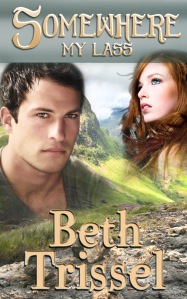
somewhere_my_lass_final1 (1)In preparation for writing my light paranormal romance, Somewhere My Lass, I did a lot of research on medieval hospitals and came across some fascinating sites. For medicinal info on ancient British/Scottish practices found at the monastic hospital of Soutra outside of Edinburgh visit: A Day In The Life Of A Medieval Hospital.
 For more on medieval hospitals in general visit this site:

"Here's flowers for you; Hot lavender, mints, savoury, marjoram; The marigold, that goes to bed wi' the sun, And with him rises weeping..."
William Shakespeare, 1611.


I posted this earlier in February on my Wordpress blog, but not everyone in the world read it and I thought it worth reposting. :)

Recently my seven year old niece, Cailin, was in my care and coughing her head off with the latest respiratory ‘thing.’  So I took some flannel (formerly an infant burb cloth) slathered it with Vicks Vapor Rub, folded the cloth so it wouldn’t stick to her shirt, and laid it on her chest.  This way her skin is protected  in case she’s sensitive to the rub–I broke out in an itchy rash last year.  Then I laid a warming pack filled with rice that can be reheated in the microwave and is cushioned by fleece against her shirt/chest and wrapped her in a blanket, periodically reheating the pack.  After this, I got out the Olbas oil and anointed her temples, added a few drops to a basin of steaming water for her to inhale.  Although complaints of ‘it smells funny’ and ‘stings my eyes’ — ‘close them,’ I answered, and other arguments arose, her coughing eased.  I’d done the same thing I reminded her last week for her cousin, my seven year old grandson, and it greatly lessened his cough.

I told her she’d come to the ‘Granny Woman’ who used herbs and old-fashioned remedies to cure.  Her eyes widened at that. To emphasize my point, I went into the sun space and picked a handful of the ‘Vicks’ plant, Plectranthus purpuratus, a pungent mentholated herb given to me years ago by an old mountain woman who swore by its powers.  Easily rerooted, I’ve kept it going and used it myself–just smelling the leaves opens your head–but Cailin was a little put off by the powerful aroma and glad I wasn’t making a concoction from this, or the mustard plaster I’d told her about.   Later on, though, my sister said how vastly impressed Cailin was, declaring I knew lots of stuff about how to make you better.   Even prattled away to the doctor about her amazing Aunt Beth who now probably thinks I’m a quack.
Back to the Granny Women, historically, they were elderly women  from ‘back in the holler’ reputed for their healing and midwifery abilities.  The term is often associated with ‘Appalachia.’  However, I don’t know anyone who actually lives in Appalachia.  We refer to the specific mountains.  But I digress.  In a time and place when doctors were few or nonexistent and no one had the money to pay them anyway,  the Granny Women were relied on for the wisdom and practices  passed down to them by the hardy females who’d gone before them.    Sure, a dollop of superstition, and at times, a little white magic, was mixed in with their practical herbal remedies, but they did a lot of good.  In the Shenandoah Valley and surrounding mountains, these women were invaluable.   Some of my friends remember their family calling in the Granny Woman when they didn’t know what to do for an ailment or injury.  Officially, these women are no longer with us.  Unofficially, they are.  And many know far more than I.

An interesting article on Appalachian Healing Traditions.  For more on the real Vicks Plant click the above link.

*Cailin with kitty Pavel (a little sticky from something) image by daughter Elise
*Old mountain house in the Blue Ridge, image by my husband Dennis.


Being passionate about the past, I relish a connection to those who’ve gone before us.  I’m fascinated with history and love old homes, historic sites, all that ties us to the richness of bygone ages.  Intrigued with herbal lore, I often use it in my writing.  Herbs influenced every facet of life in pre-modern times and have changed little over the centuries. When I hold an aromatic sprig of rosemary in my hand, I’m touching the same plant beloved by the ancients. Some heirloom roses hail from the glory days of Rome.
To further that sense of oneness, and for their many uses, I grow a variety of herbs.  Thyme, basil, sage, and chives are a few in my kitchen garden.  Lavender and scented geraniums are wonderful for their scent alone.  Ladies once wafted the delicate perfume of toilet water.  Porcelain bowls filled with colorful potpourri scented musty parlors.
Before taking the leap into penning novels, I wrote vignettes on rural life.  I’ve compiled these into a work of non-fiction and may self-publish.  At one time, I also had a modest herb business and gave talks on herbal lore to local groups much as Julia Maury did in my light paranormal romance Somewhere My Love.
Back to my herbal enterprise, with the faithful assistance of my long-suffering mother we grew and dried herbs and flowers for wreath making and potpourri which we sold in the fall.  Herbs and heirloom flower seedlings were raised in the small greenhouse my hubby built me and sold in the spring.  Any profits were swiftly overrun by subsequent visits to the allergist,whom I’ve seen regularly for years now and still get four shots at a crack.  It seems I developed every allergy latent within me by exposure to all these pollens.  *Note, If you’re allergic to ragweed, avoid an herb called Sweet Annie and the Artemisia family.  But I’m considered to rank in the top ten percent of allergy sufferers in the nation, so what are the odds of that?
After being run indoors and my gardening curtailed, I took up writing and have used my love of plants there.  I’m still an avid gardener, though with shots, meds and limits.  Is it spring yet?  My nose says yes. :)

A garden is never so good as it will be next year. ~Thomas Cooper
An addiction to gardening is not all bad when you consider 
all the other choices in life. ~Cora Lea Bell