Showing posts with label Country life. Show all posts


Colin and Chloe with Buttercup“The cow is of the bovine ilk; one end is moo, the other milk.”
― Ogden Nash,
In the world of cows, 92% of the females in a boy/girl set of twins are sterile and called Freemartins. The reproduction systems in these cows are malformed and they rarely ever grow to adulthood with the ability to reproduce. One cow defied the odds. She was taken in by our daughter Alison and her husband to raise on their little farmstead.  Her story as told by Alison.
Diron holding baby calf.jpg1“Early in 2011, a brother and sister twin Holstein calf set from my parent’s dairy farm (Trissel’s Farm) came to live with my husband and me. A female cow, who is twins with a male, is almost always infertile, nature is smart like that, and so they’re generally used for beef. And that’s what we were raising them for. We decided it was best not to name the pair; but our [then] 5-year-old son, Colin, called the twin calves Violet and Moo. As Violet grew, we couldn’t help but notice that once a month it was an incredibly hard job to keep her in our pasture. Our neighbor’s field of a few beautiful Herford cows, complete with a bull, boarders ours. One cold morning in early spring, I was loading the kids in the car, getting ready to take Colin to preschool. I noticed Violet was missing from our field. We drove all around looking for her, and even drove to our neighbors house, twice, thinking maybe she was visiting their cows. The second time we drove to their house, because I had no idea where else she could be, Colin spotted her. “There she is!! She’s making friends already with the ‘bully’ cow!”  So she was, and so our neighbors allowed her to stay for a few days.
Months went by and we hadn’t thought much about the incident with the “bully cow.” But come to think of it, she hadn’t tried to leave the field in a long time.  And well, yes, she was getting big. Bigger than her twin brother.This past fall, a farm vet confirmed that the (almost) impossible had happened. Violet was pregnant and due around Christmas time. Her darling half Herford heifer calf was born a few days before Christmas. Violet the Cow rejoined her sisters of the herd at the Trissel Farm. My neighbor says she thinks Violet knew what she was doing all along. Her baby girl, named Buttercup, is with us now and someday will be a dairy cow too, only not on the Trissel farm, but on a place in the country providing milk for several families.”~
Colin and Chloe holding heavy cream carton with their image on the label***Baby Buttercup, Colin and little sister Chloe are featured on the Shenandoah Family Farm’s cream label. In 2013, our family banded together with 20 other small family farmers in the Shenandoah Valley to produce and sell our own natural, local, sustainable dairy products. For more on Shenandoah Family Farms, visit our website and like us on Facebook. Also, you can help us bring our local products to your grocery store by signing theProduct Request Petition. We’ll send these requests right to stores in your area so you can try our products as soon as they are available (later this month). It’s a dream we’ve worked hard to achieve and our best hope of preserving our farms for future generations in the Valley.
*Images of Baby Buttercup and Colin and Chloe and their father Diron

Pussy Willow
A few evenings ago, as the sun dipped behind the trees on the wooded hills above our farm, I set off with my trusty wheelbarrow heaped with pussy willows we’d rooted last year and wintered over in the garden–where they could not possibly remain–and a shovel. My aim, the farm pond in the meadow. Highly curious heifers with no regard for personal space followed at my heels like pet dogs. If I turned around, they were breathing down my neck. A little disconcerting, so I waved them back. Repeatedly. I was also slightly concerned about chancing upon a coyote, but decided with this lot keeping me company that wasn’t likely. Might not have been anyway, but coyotes do visit the meadow when making their rounds late in the evening or at night. Rarely in the day.
lab mix, our farm dog LanceMy two farm dogs chose not to go with me on this particular venture. Wise. I had to toss the pussy willows, contained in feed sacks after I dug them out of the garden, and my shovel over not one, but two, electric fences and then roll beneath the wire to reach the grassy edge of the water. For those of you who think it’s easy to dig in wet muck sucking at your shovel and your boots, I can assure you that it’s not. Already worn out after a day of overdoing it in the garden, this final endeavor took the last of my reserves. And I sank in the squelchy mud up to my boot tops.  Then my knees. Digging and clawing my way along, I shifted clumps of saturated grass and oook to get my plants into place. Then heaved myself back up the bank to the meadow and pushed my barrow home. A task I desired to accomplish before dark so I could still see the electric fences, installed, btw, to keep the cows out of the pond.
beth252celise252candcowsIf the pussy willows are happy there, we will have lovely catkins next spring. Supposedly, they prefer swampy places and the edges of streams, so this spot ought to suit them. But I reserved one to plant someplace else, just in case. As ever, I am in pursuit of Eden on earth. My own bit of heaven. And I have the aching back to prove it.
(***Images of Lance in the muddy creek near the pond, and daughter Elise on a different outing. And our oh so friendly cows. To be expected, really, as they were hand raised and bottle fed, etc).
pussy-willow-hatsI did a search on pussy willow quotes and found this rather unusual one: ““Everything that anyone would ever look for is usually where they find it.”
― Margaret Wise Brown
I have no idea how that relates to pussy willows, but liked the quote. I hope to find my willows where I planted them, growing happily. I shall report back.


“The spring has sprung, the grass is rizz. I wonder where them birdies is?” ~A.A. Milne


Actually, the birds are singing away outside my door, but I like the quote and that's how it goes.To declare the Shenandoah Valley in the full bloom of spring is a tad premature, but we are poised to burst forth. The early plants already are. And, like the happy kitty above, I say bring it on! This has seemed an exceedingly long and tiresome winter.

The report on the seeds I've started in my little greenhouse is that many of them are coming up, though not all. It's said that parsley has to go to the devil and back again seven times (and he keeps some for himself) before those seedlings emerge. And I have more seeds I need to start. But I will. I'm using the large yogurt containers to begin the seeds and will transplant them into the small yogurt containers and whatever else I can find. I'm recycling, and we're eating a lot of yogurt these days, also begging the containers from friends and family. If the cost of shipping were cheaper I'd ask you to mail me yours. 

As to my gardens, before the snow that hit on Sunday and into Monday, I was able to work outdoors and pull a whole wheelbarrow full of overwintering weeds. Yes, they always manage to survive the harshest weather. I'm taking stock of what else made it through and considering which plants didn't and should be replaced or grow something different in that spot. I am expanding my herbs, so look for more fragrance this year.

For those of you who love gardening and country life, I recommend my nonfiction book, Shenandoah Watercolors, was 2.99, now only .99 at Amazon. The book is also available in print with beautiful pics of the valley and mountains taken by my talent


Heavy wet snow fell last night and the trees are laden, my crocus buried. But late Saturday afternoon after the rain showers ended, the day turned mild and I pulled some overwintering weeds from one of my flower borders. A whole wheelbarrow full. While happily bent to my labors, I heard the sweet trill of a meadowlark, my favorite songbird. Silent today. But when the sun shines and the weather softens again, I will hear it sing. This crazy weather is typical of March in the Shenandoah Valley. A cold snap follows on the heels of a wonderfully balmy day or two.  This March has been on the colder side and quite wet, which is just as well with our tendency toward summer droughts, so we'll take the moisture while we can. 


Ducks and geese love all the puddles that come with the rain, and our pond is finally full again after dwindling to a sad state in past summers. Happy quacks resound against the fussy geese fighting over nesting sites. These battles, and the meadowlark singing, are among the first signs of spring. And the pussy willow blooming. I picked a lovely bouquet of pussy willow on Saturday too.

Back to the meadowlark, my goal is to ever actually see one of these elusive birds again. Theoretically  this shouldn't be such a challenge what with our meadows and all.  Once or twice, I’ve glimpsed a yellow flash  and spotted the bird perched on a fence post before it flew.  Mostly, they hide in the grass and skim away to another spot before I get a good look, calling all the while from various positions in the meadow. 
One spring daughter Elise and I were determined to track down the evasive songster and tenaciously followed its calls, even climbed over the fence into the neighbor’s pasture and picked our way along the little creek, but never caught up with that bird, or birds.  There may have been more than one.  So unless I catch another rare glimpse, I must content myself with their beautiful trills.  Birds like this need tall grasses and untidy hedge rows for nesting.  Bear that in mind in your own yard and garden.  Keeping everything trim and cultivated robs our feathered friends of habitat.  It’s also a good excuse for a less than perfectly kept landscape.    A little wilderness here and there is a good thing.

Images of early crocus before the snow and Elise and me on a walk about the farm, two years ago. A cow is saying hello. They follow us like pet dogs.

We have the Eastern Meadowlark.  For more on that variety click here.
For more on the Western Meadowlark~
*Royalty free Image of meadowlark–until we can finally photograph one.


An excerpt from my nonfiction book about gardening and country life,  Shenandoah Watercolors, a 2012 EPIC eBook Award Finalist:
“The best remedy for those who are afraid, lonely or unhappy is to go outside, somewhere where they can be quiet, alone with the heavens, nature and God. Because only then does one feel that all is as it should be and that God wishes to see people happy, amidst the simple beauty of nature.” 
~ Anne Frank
(Image by my mother, Pat Churchman. If you look closely you can see my daughter Elise as a child and her little friend, James, peeking our from behind the trees.)
“A cold autumn wind blew as my younger daughter, Elise, and I scurried about the garden in the last of the light to gather in our treasures. She heaped great orange Cinderella pumpkins into the wheelbarrow and picked the rest of her pink and blue Indian corn. Beams of sun touched the crimson cockscomb flowers just coming into full bloom, an antiquated variety that I seeded late and coaxed through our wet summer. (Cinderella Pumpkins, image by Elise taken this fall)
The vibrant color of the plumes stood out against the grayish black clouds like a king’s velvet robes. This wealth will quickly dwindle if the temperatures dip too low tonight. The weather is quite cool here today. Forecasters are calling for the chance of frost tonight, but only if the gray blanket covering the sky clears and bright cold stars come out. Then maybe Jack Frost’s chill breath will silver the hoary earth.
I must get myself to the garden and pick the last of the orange persimmon tomatoes–truly the most luscious variety in the world–and the heirloom lima beans, called Christmas limas. These beans are mottled a lovely wine color and very tasty. Perhaps I can get our dog, Mia, to help me. But I doubt it. She takes no interest in vacuuming or dusting either, just wants to know when its time to eat.
I have this wild hope in the back of my mind that maybe I will wake up one day and find the house ordered and gleaming, all put to rights while I slept. I suspect this delusion comes from my having read The Elves and the Shoemaker too often, and other fairy tales. I have also seen too many Disney movies.”
(Colorful maple tree near green rye field on our farm in the Shenandoah Valley, image by Elise)
***Shenandoah Watercolors is available from Amazon in kindle and now paperback with lovely photographs taken by my family.
***For a seed link to the Christmas Pole Lima Beans click HERE.
***For a seed link to Cinderella Pumpkins click HERE
***For a seed link to my favorite Orange Persimmon tomatoes click HERE.
After your initial purchase you can save the seed.


A late summer excerpt from my nonfiction book,  Shenandoah Watercolors, a 2012 Epic eBook finalist. Free in Amazon Kindle from August 19th through the 21st.
We’ve had many misty starts to the day this August. Haze hugs the pond, parting just enough to reveal the long-legged blue heron fishing for his breakfast. There’s a country saying about the number of foggy mornings in August being an indicator for the amount of snows we’ll have this winter––a heap, at this rate.

Dozens of swallows skim over the pond as the sun sinks below the Alleghenies. If I were standing on a distant ridge, would it sink behind me, or the ridge beyond that one?
The water is calm now but was awash with waves during the storm that hit a short time ago. The grassy hill and maple tree are reflected on the surface, silvery and streaked with rose from the western sky. All is peaceful as a soft twilight settles over the valley. Utterly idyllic, until I pause to consider what all of those swallows are after. There must be clouds of mosquitoes.
Here’s another thought, where do all the birds spend the night? Are the woods up on the hill lined with birds perched wing to wing jostling for space on the branches? I’ll bet they make room for the big red-tailed hawk. He gets the whole tree––as many as he wants. It’s good to be king.
**Image of our pond taken by my mom, Pat Churchman
**Image of Hawk by daughter Elise taken up in the meadow behind our house


“It is impossible to keep a straight face in the presence of one or more kittens.” ~Cynthia E. Varnado
“An ordinary kitten will ask more questions than any five-year-old.”
Carl Van Vechten
“A kitten is chiefly remarkable for rushing about like mad at nothing whatever, and generally stopping before it gets there.”
Agnes Repplier


These precious little cuties are my son and daughter-in-law’s. Elise and I went to visit last week and she had her camera.  I’m holding them in my bandaged overgardened hands. I got in a fight with a thistle and lost.
“It is said that the effect of eating too much lettuce is ‘soporific’.”
 Beatrix Potter, The Tale of the Flopsy Bunnies
“Peter lost one of his shoes among the cabbages, And the other shoe amongst the potatoes.”
 Beatrix Potter


“Peter was not very well during the evening. His mother put him to bed, and made some chamomile tea: “One table-spoonful to be taken at bedtime.” ― Beatrix Potter, The Tale of Peter Rabbit


An excerpt from my nonfiction book about gardening and country life, Shenandoah Watercolors, available at Amazon in kindle and also print with lovely images of the valley and mountains. (2012 EPIC eBook Finalist)
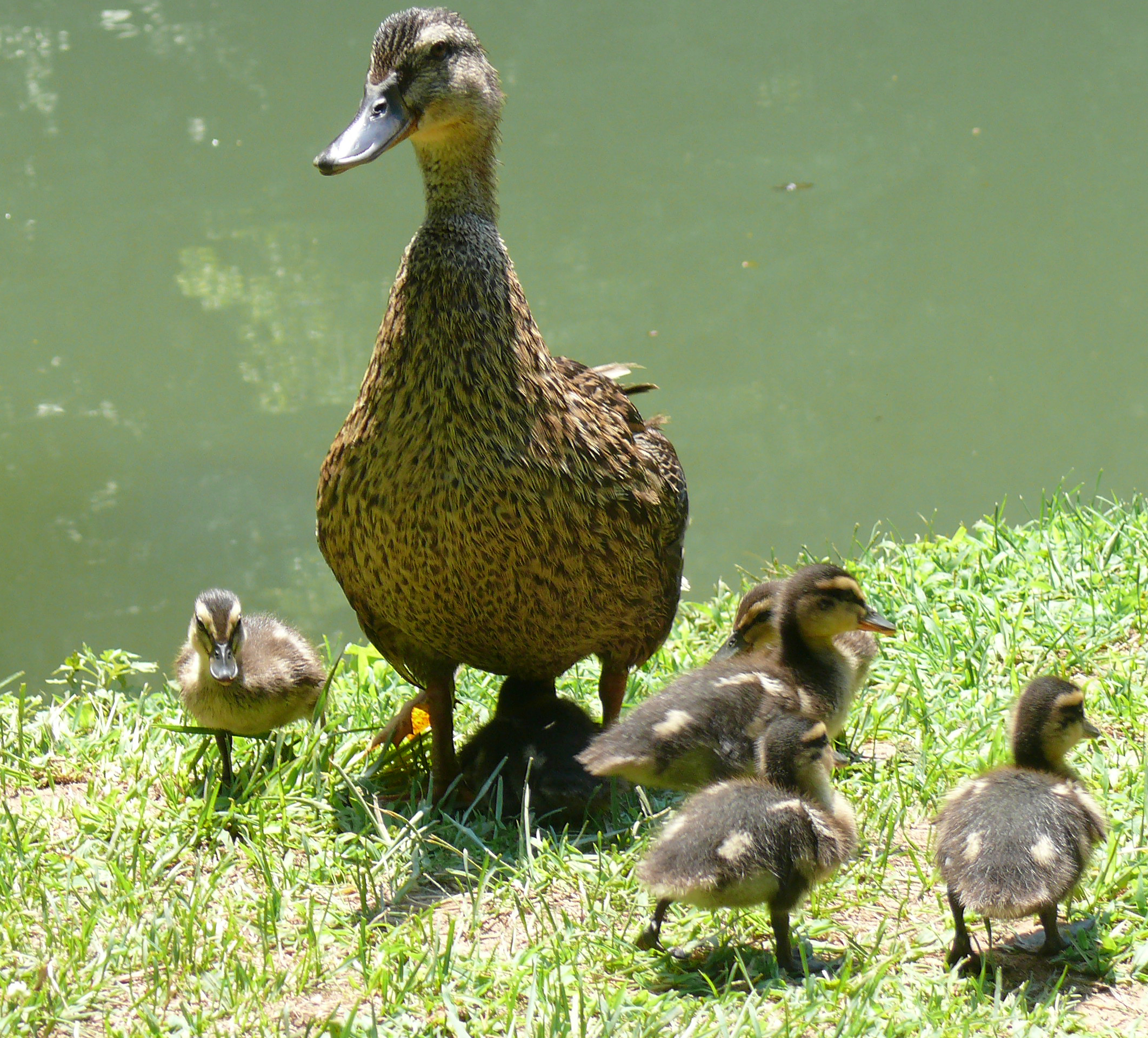
~When the world was new and I was young, I ordered a dozen Rouen ducklings (resemble large mallards) from a game farm and began my love affair with ducks, blessed by its moments of joy and cursed with inevitable tragedy.  The box of downy babies was delivered directly to my door much earlier in the day than our mail normally comes as the mailman had wearied of their incessant peeping.  
I took the new arrivals from the grateful carrier and transferred them to a corner of the family room under a warm light bulb.  My two oldest children, in grade school then, were delighted with their new playmates, but soon joined me in the discovery that these tiny creatures were incredibly messy.
The ducklings reveled in their food, spewing a mixture of feed and water on themselves, the box, and the walls.  This led to their speedy removal to an unoccupied rabbit hutch in an outbuilding.  Here they grew in sheltered bliss until we deemed them ready for life on the pond, unaware that our charges needed parental guidance.  
T'he unchaperoned youngsters soon slipped under the fence and lost themselves in the neighbor’s grassy meadow.  We tracked their frantic quacks and carried them home, only to have them forget and stray again and again.
Sadly, unwary ducklings do not know to be on guard against snapping turtles, something their mama would have taught them.  By summer’s end, just two grown ducks remained and were fondly named Daphne and Darlene.  They were inseparable and divided their day between the cows and geese in the barnyard and forays to the pond.
(*Our pond, calm on this day but often filled with ducks and geese)
The next spring Daphne and Darlene built a mutual nest inside a clump of gold-button tansy at the edge of the garden and patiently sat on the eggs that would never hatch.  It was time to find them a suitable spouse.  One fall evening “Don” arrived in my hubby’s pickup truck. (*Little creek that meanders through our meadow and under the fence to the neighbors)
The girls took an instant liking to the handsome drake, and he to them, though he showed a slight preference for Darlene.  As spring neared again, we noticed a wild mallard drake observing our little band.  He would dash forward for a bite of grain at feeding time, only to be driven away by Don.  We pitied Dwayne, as he soon became known, and tossed a handful far to the side for him.  Besides the free lunch, it seemed that Dwayne was attracted to our Daphne, much to Don’s strong disapproval.
The small male was undeterred and eventually won acceptance, amusing us by his attempts to mate with Daphne, twice his size.  Persistence won out though.  That year the girls had separate nests, Darlene at the base of a bittersweet vine, while Daphne went back to the tansy.  Don and Dwayne bonded, swapping stories as they awaited imminent fatherhood.
The ducklings hatched in late spring and grew quickly.  All survived with excellent care from their mothers.  By fall we could see Dwayne’s influence on the flock.  His offspring were considerably smaller. It was a golden, happy time. Late afternoons we quacked loudly, calling our ducks for feeding.  Heads popped up from the seeding grass and they answered back then waddled single file behind Don, their noble leader.  If we were late with dinner, they gathered to complain about the lack of service and were not averse to heading up to the house to fetch us if necessary.
Autumn in all its splendor passed into a winter that was our most severe in years.  We tromped faithfully through the deep snow every day to scatter feed on the frozen pond.  Then one morning after fresh snowfall we could not find a single duck.  Our anxious calls came back to us empty on the wind…searching revealed spatters of blood and dog tracks in the snow, the silent witness to their grim fate.   Still, we hoped that some birds had escaped the attack and combed the neighborhood, finally locating a pair of Dwayne’s offspring.  Only the smaller ducks could fly well.  We had unwittingly fed the others up to be “sitting ducks,” an expression I understand too well now.  A week later Dwayne returned on his own, but it was a bleak time.  How empty the pond seemed without the gang.
That May, Betty, our lone remaining female, hatched a fuzzy brood.  Familiar quacks again filled the air and gladdened our spirits.  It just isn’t spring without ducklings.  ~
All of this took place eons ago, but we still have ducks on our pond and an ample flock fussy barnyard geese who make daily visits down to the water.  The small town of Dayton, Virginia, not far from us, has a lovely body of water called Silver Lake (the size of a large pond) and a stream that attracts so many ducks the town has installed a duck crossing sign.
*Pics of our farm and ducks, also my mom and dad’s ducks…it’s a family thing this love of ducks. *Images by my mom, Pat Churchman.  *The one of the creek by daughter Elise.
*This story about ducklings is the one that really got me started in writing. It was ‘almost’ published in Southern Living Magazine and that editor gave me much encouragement about my writing, then she referred me to an editor at Progressive Farmer who accepted it and several more nonfiction pieces about rural life, but their free-lance column got axed before publication.
(Tame duck swimming in ‘duck weed’ in my parent’s water garden)


At long last Shenandoah Watercolors is out in print!   My talented daughter Elise labored hours and hours to design the layout and incorporate her and my mom, Pat Churchman, and husband Dennis's beautiful photographs of the Shenandoah Valley and mountains.  Also a few vintage images from times past.  
A lovely coffee table sized book, Shenandoah Watercolors should be a joy to those who want to savor the images and linger with me in my beloved valley.
The book is available at Amazon, and I authorized other outlets for it as well but am not sure where it many show up for sale.  The cost is as inexpensive as we could possibly make it for a book of this size with so many colored images.  We won't get rich, that's for sure, but hope to share our love of the country, of our valley and the mountains, of family and all that's good.  And God bless those who join us.