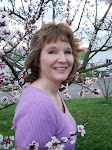
Good Morning, Everyone!
First I'd like to begin with a humble apology. As you know, I was supposed to drop by on Thursday but had internet issues all week and was unable to access. Came back up last night so Mama being the gracious person she is gave up her spot today to me. Thanks, Mama!
With that said, let's move on.
Dream Manuscript? Is there such a thing for an editor? Well...
Yes and no.
I've had some come across my desk that come mighty close but so goes it in life--nothing and no one is perfect:) At least, that still walk upon this good old Earth.
My idea of a "dream manuscript" would be one that-my first point is extremely important if you want an editor to even look at it-FOLLOWS THE RESPECTIVE PRESS' SUBMISSION GUIDELINES. Believe it or not many authors do not follow this first simple rule. Then I would say I look to see if the manuscript is tight, has limited typos and punctuation errors, and starts out with a BANG!
What, you ask, does all that mean?
Guidelines
This is self explanatory. Any author who is readying a submission to ANY publishing house first needs to take the time to
READ THE GUIDELINES
I can't stress this enough.
a.) make sure the house is interested in your type of book. EX: if you write crime suspense you would not submit it to a strictly contemporary romance publishing house UNLESS they stipulate your subgenre. Same goes with the Black Rose imprint at The Wild Rose Press. If your story is about Faeries and nymphs casting spells on villagers who wander into the woods, you would not submit to my line. This type of whimsical romance would go to the Faery imprint. That tells me right off the bat or broom, LOL that you have not READ the guidelines governing my particular line. So the moral here is be sure your submission fits the needs of the publishing house and the subgenre as well.
b.) DO NOT send any form of fancy formatting into ANY publishing house. There are specific formatting guidelines for a reason. Authors want to give pizazz to their manuscripts and make them look pretty but reality is editors don't want or need fancy. Simple is better and following the format guideline is best. An editor will not take the time to reformat your submission. It is just easier to reject the sub. Again, this tells the editor that you have not heeded the simplest request and that is following the house guidelines.
The Hook
When I sit down to read a submission, I want to be pulled into the story from the first sentence. ALWAYS begin a story with something happening. DO NOT set the scene or introduce characters unless you can do so in some form of ACTION. If I find I am reading page after page of summary, character intro and/or story setting, I become bored and guess where that manuscript is headed? I want to hit the floor running as do most readers.
Do yourself a huge favor. Before sending any manuscript to an editor for a review be sure to test it with someone who is willing to be honest.
PROOFREAD AND SPELLCHECK!
These simple tasks seem to be the least done. Editors want to read clean, little maintenance manuscripts. You don't have to be an English major to be sure your basic punctuation and spelling are for the most part correct. Geez, the computer word programs do most of this work for you these days. There is really no excuse to send a sloppy, error-filled manuscript out.
Granted there are situations when the word program doesn't always recognize missing or misused words but a proofreader would.
Another pet peeve of mine is using the wrong words. Confusing words such as peal/peel, there/their, bare/bear, etc. Read your copy carefully-one word at a time-before submitting. Better yet, don't read it. LOOK at it. Look at it very carefully one word at a time. Some have found working backwards helps to find errors you wouldn't normally pick up. And remember, a fresh, unbiased set of eyes always works best. Have someone who will be brutally honest proof you copy.
Another problem I see is using words like effect/affect, principle/principal, accept/except, that/which, among/between, alright/all right in the wrong context. You get the picture. If you are not sure which to use grab that handy thesaursus or dictionary. Mine is always close at hand.
Clean Tight Writing
I love to pick up a story that utilizes the right balances of imagery, description, scene setting, dialogue, chacterization, etc.
Again, nothing is perfect but a careful author can get as close to perfection as possible by utilizing one simple rule.
DO NOT OVERDO.
Watch for things like rambling dialogue with no beats or sideactions. This assists in making the reader feel part of what's going on. Use elements of the senses always in your writing. Let the reader taste, smell, see, hear... All this works to drop a person in the scene with the characters.
Watch for repetitions and redundancies. Do not lead or remind your readers. It's insulting. If you've explained something once and it's important to the plotline, trust me, the reader will remember.
Try not to list what's going on like a laundry list. Clean, crisp action description works best. Try not to ramble on how the heroine is mixing cream in her coffee, then goes and puts the milk in the fridge, then rinses her spoon, then walks back to the table and sits down only to finally say what's on her mind. Annoying isn't it?
Avoid God-like author intrusion. Stay within character POV as much as possible.
A short word on POV.
I prefer stories that carry only a few POVs throughout. Also I like to see one POV a scene. If more than one is necessary than split the scene so you are not what we call 'headhopping' from sentence to sentence or paragraph to paragraph. When an author gets into too many POVs in a story things become convoluted and confusing. Keep things simple.
One more point is the one you all probably hear the most. SHOW don't TELL.
Be sure to 'show' your scenes. Again you accomplish this by using the senses, imagery, and active verbs. Avoid telling like the plague:) Telling slows down the action. Summarizing works to avoid getting into areas that really don't move the plot along but use this sparingly as well.
I will stop there. I believe I have given enough fodder to chew on today and don't want to keep rambling on. I hope I have helped clear some things up about what I look for in a manuscript. I would like to advise you that this is my preference and not that of ALL pub houses across the board or even ALL editors at TWRP.
Dream Manuscript? They're out there*grin*. I've seen them but they are few and far between. I hope my post today will bring more my way:)
I will check in throughout the day to answer any questions you may have.
Thank you for having me here.
Callie Lynn Wolfe
Senior Editor, The Wild Rose Press
Black Rose Imprint
callielynnwrp@aol.com